
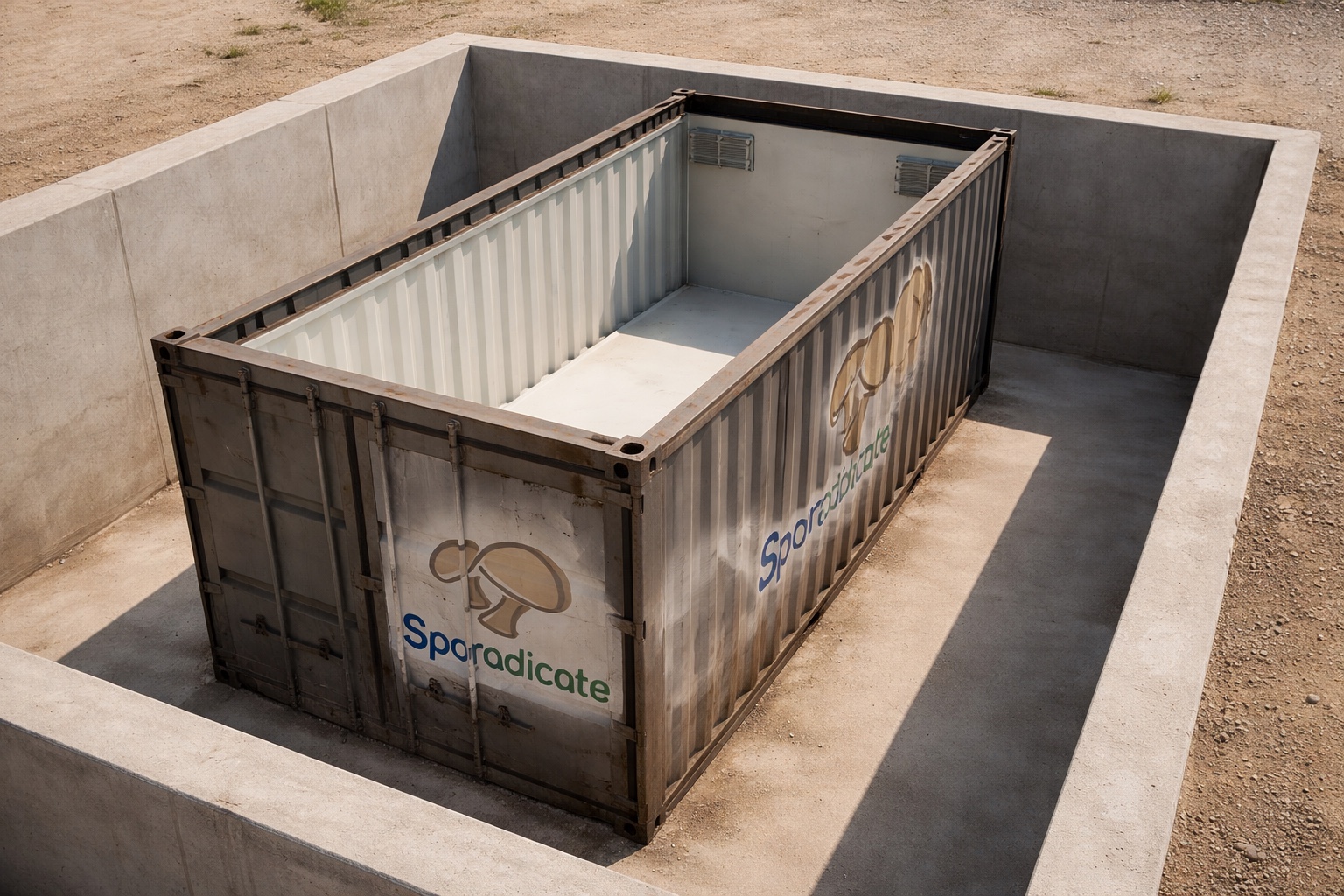
Bio-enzymatic degradation
Mycelium bunkers are designed to break plastic down at the molecular level.
Inside a controlled bunker environment, fungal biology and its enzymes begin breaking apart the full plastic molecule rather than simply fragmenting it into smaller pieces. The goal is complete biological degradation that avoids leaving microplastics behind.
- Targets whole-molecule breakdown rather than surface damage alone.
- Designed as a controlled process to support clean, consistent treatment.
- Supports the wider facility by handling selected plastic streams that need a biological pathway.
Why this matters
Many plastic treatment methods can leave small fragments behind. Sporadicate's mycelium bunker pathway is designed to use bio-enzymatic action to fully break down selected plastics, helping prevent microplastics from remaining in the final output.
How it fits the wider process
Pyrolysis remains the lead recovery pathway for suitable mixed plastics, while mycelium bunkers provide a supporting treatment route for selected streams where biological degradation is the better fit.